Digital Twins in Manufacturing
Modern factories generate tremendous amounts of data, including vibration readings, temperature curves, energy utilization levels, throughput counts, and even CAD models of assets on the floor. Unfortunately, most of these data points are stored in an isolated and fragmented manner.
Digital twins help fuse live operational data with virtual representations of physical assets, providing a continuously updating replica of the entire factory floor. With Industry 4.0 gaining momentum in manufacturing, digital twins have become even more important. This article explains what digital twins are, how they can be used in manufacturing, and how to implement typical data integration tasks while working with digital twins.
Summary of key digital twin in manufacturing concepts
| Concept | Description |
|---|---|
| Digital twin | A digital twin is a virtual representation of a physical asset, process, or system that is continuously updated with real-world data. It differs from a static 3D model in the sense that it is bidirectional: Operators can control the physical asset as well as view the simulation of the physical asset in real time. |
| Core components of digital twins | The core components of a digital twin are the physical asset instrumented with sensors; a data pipeline that supports ingestion, transformation, and synchronization; the virtual model for geometry, and the visualization layer. |
| Use cases in manufacturing | Digital twins are used in manufacturing for implementing predictive maintenance, process optimization, quality control, spatial planning, energy optimization, and operator training. |
| Data integration bottleneck | Most digital twin projects experience greater challenges in building the data integration part than the simulation and modelling part. A manufacturing digital twin needs to deal with files in several formats associated with digital modelling, reality capture, IOT telemetry, enterprise applications, and visualization targets. |
| Best practices while building digital twin data pipelines | Key best practices when dealing with digital twins include establishing early standardization based on open formats, treating coordinates as first-class concerns, optimizing sync frequencies, automating data integration based on an all-in-one spatial computing platform, and implementing automated validations. |
Understanding digital twins
A digital twin is a virtual representation of a physical asset, process, or system. The virtual representation is kept up to date with its real-world counterpart through bidirectional synchronization of data. The digital twin enables you to view the status of the real-world counterpart, predict its states, and control it through actions taken on the virtual representation. A digital twin is different from a 3D model or a one-off simulation in the sense that the link between physical and virtual representation runs both ways allowing the twin to control the physical device as well as display the real-time status.
A digital twin primarily consists of four components:
- Physical asset instrumentation: Sensors connected to the physical asset monitor its state in real time and send data to the backend. The sensors could include temperature probes, accelerometers, GPS units, flow meters, or cameras. The quality and quantity of synchronizing data from sensors and the frequency of updates to the backend determine the accuracy and effectiveness of the twin. This layer also includes any hardware controls that are required to manipulate the physical asset in real time.
- Data pipeline: The pipeline ingests data from sensors, cleans it, transforms it, and stores it for further analysis. Since raw sensor data is often unfit to be used as it is, it needs to be validated and reconciled. This component does the most heavy lifting in the digital twin architecture since data can come in several formats, including IOT telemetry, enterprise application events, and spatial information.
- Virtual representation: This component represents the virtual geometry of the system and the simulations that are required to predict its next state. The virtual geometry can come from CAD models, BIM, or scanned point cloud data. The simulations include rules or machine-learning-based models.
- Analytics and visualization layer: This layer turns the cleaned data into insights and visualizes it on a virtual symbolic representation. It also provides an interface that operators can work on to manipulate the real-life system. This can be anything from a simple dashboard to a completely interactive 3D model of the system with virtual reality.
The four component layers of digital twins can be implemented in a cloud provider of your choice. Hyperscalers like AWS, GCP, and Azure provide SAAS frameworks required for implementing these components. Shown below is a high-level architecture of how you can use AWS components to implement a digital twin.
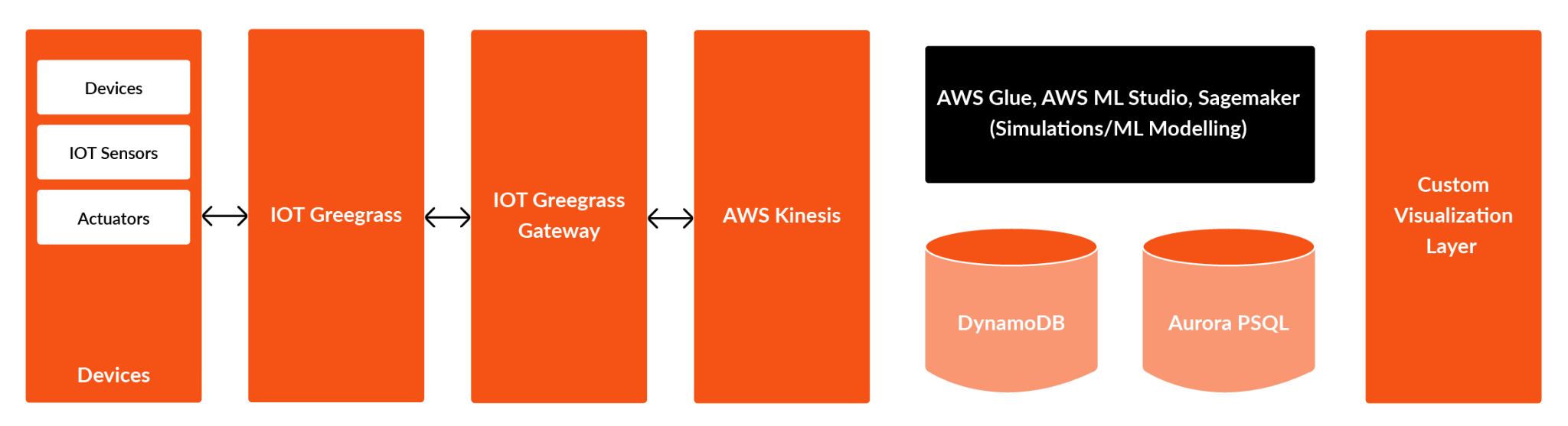
While several ready-to-use components are available from hyperscalers, the most difficult parts of implementing one are data integration and simulation, where a lot of custom development has to be done based on use cases.
Digital twin use cases in manufacturing
Digital twins in manufacturing have several use cases, from the most basic real-time visualization of data to optimizing complete factory systems. In manufacturing, digital twins can vary according to the scope they handle. They are typically used at four levels:
- Asset level: At this level, digital twins are used to understand and predict the state of an individual machine.
- Production line or process level: A production line typically contains several machines that perform specific roles. A digital twin of the entire line can help in optimizing the flow of the complete line. This requires having sensors in all components of the process and processing them to create a connected view.
- Factory level: Digital twins can be used to create a complete virtual representation of a factory. They represent the layout, infrastructure, and the production lines, helping larger teams gain a bird’s-eye view of the entire facility.
- Multi-site supply chain level: Here, digital twins represent multiple physically separated factories. They are useful for portfolio planning and complete operational oversight.
The subsections below describe typical digital twin use cases implemented in the manufacturing domain.
Predictive maintenance
This involves fetching real-time operational parameters from machinery and analyzing their performance and remaining usable life. Digital twins provide a visualization of running equipment, and they mark components that may fail or require maintenance based on real-time analysis. Component performance metrics are simulated using anomaly detection algorithms like isolation forest and time-series forecasting frameworks like Prophet. Predictive maintenance helps to optimize production schedules and reduce downtime.
Process optimization
Digital twins that ingest data from several individual assets and create a bird’s-eye view of the complete factory line help teams understand bottlenecks and thus reduce wastage and downtime. They also help engineers to understand the effects of a change in layout or the addition or deletion of new machines without actually performing the changes. The ability to simulate process line changes is very valuable while designing new factories and production schedules.
Quality control
Digital twins help with automating quality control through cameras and 3D scanners. You can compare the point cloud data of a finished product to an ideal asset profile and decide whether the finished product meets expectations. It is also possible to monitor the line, do visual inspections, aggregate counts, etc., through cameras. You can also control quality by combining the machine’s operational parameters while performing operations like welding and painting.
Spatial planning
Simulating spatial plans involves combining CAD, BIM, video scans, and 3D scans of the factory premises. Once a simulated model of the factory is created, it is possible to simulate the effect of an addition or deletion of equipment or other objects. This helps organizations move away from legacy floor plan documentation and adopt a completely digital map of the premises to make decisions.
Energy optimization
Digital twins help monitor energy usage in real time and perform analyses based on that data. You can identify where power is wasted and even schedule operations at a time when power costs are lower, depending upon local regulations. For example, several local governments change electricity costs based on the time of day, so a company can use energy usage simulations to prepare the best production schedule. It is also possible to detect anomalous energy usage and point to larger issues like machine maintenance problems.
Operator training
A comprehensive digital twin that combines monitoring, simulation, and machine control helps train employees to operate and troubleshoot issues. New employees can learn processes by interacting with the virtual model and simulating the effects of changes before committing to them. Digital twins also enable remote diagnosing and troubleshooting by reviewing the twin’s state and parameters rather than physically inspecting the real-life equipment.
The data integration challenge
The most complex part of building a digital twin is the data integration challenge—a digital twin needs to handle several data formats originating from disparate systems. The data can come from CAD and BIM systems, IOT sensors, spatial plans, equipment readings, energy systems, power systems, etc. Collating all these into a standard format so that simulation models can act on it is a big challenge. While hyperscalers provide the infrastructure and base SaaS frameworks to deal with the data, engineers need to write a significant amount of custom logic to transform data and feed it into relevant downstream systems.
Digital twins also need to handle the outbound data from decision systems to the systems that they control. This data is mostly commands that trigger the system under control to act according to decisions that were made.
Let us now look into a typical data integration challenge while working with digital twins for the factory floor. Take the example of a digital twin that displays live operational parameters of equipment in a factory in a dashboard along with its real spatial position in a factory layout. Such a twin must ingest the live operational data, join it with the spatial coordinates of the equipment, and feed it to the visualization layer.
The challenge here comes from the fact that the two data sources provide data in different formats. The telemetry data will arrive in CSV or JSON format with keys and attributes for each data point, while the spatial data will arrive in the CAD or IFC formats. It is necessary to merge them using a programming language like Python and work around the formatting and validation challenges. Imagine doing this for hundreds of integrations while creating a digital twin for a factory.
For simplicity of explanation, assuming that both datasets are available as CSV files, the Python code will look as follows.
import pandas as pd
import json
from pathlib import Path


telemetry = pd.read_csv("sensor_readings.csv", parse_dates=["timestamp"])


assets = pd.read_json("asset_registry.json")


latest = (telemetry.sort_values("timestamp")
                    .groupby("asset_id")
                    .tail(1))
latest["status"] = latest["temperature_c"].apply(
    lambda t: "alert" if t > 85 else "normal")


twin_state = latest.merge(assets, on="asset_id", how="left")


features = [{
    "type": "Feature",
    "geometry": {"type": "Point", "coordinates": [r.x, r.y, r.z]},
    "properties": {"asset_id": r.asset_id,
                   "temperature_c": r.temperature_c,
                   "status": r.status}
} for r in twin_state.itertuples()]

Path("twin_state.geojson").write_text(json.dumps(
{"type": "FeatureCollection", "features": features}))In reality, the spatial data will come in formats like IFC, and you would have to use frameworks to parse it and convert it into CSV. An alternative to the manual programming-based approach is to use a data integration framework that supports popular data formats and spatial computing. One such example is FME by Safe Software, a no-code/low-code data integration framework tailor-made for integration challenges in spatial computing.
Let’s see how to implement the data integration example mentioned above using FME.
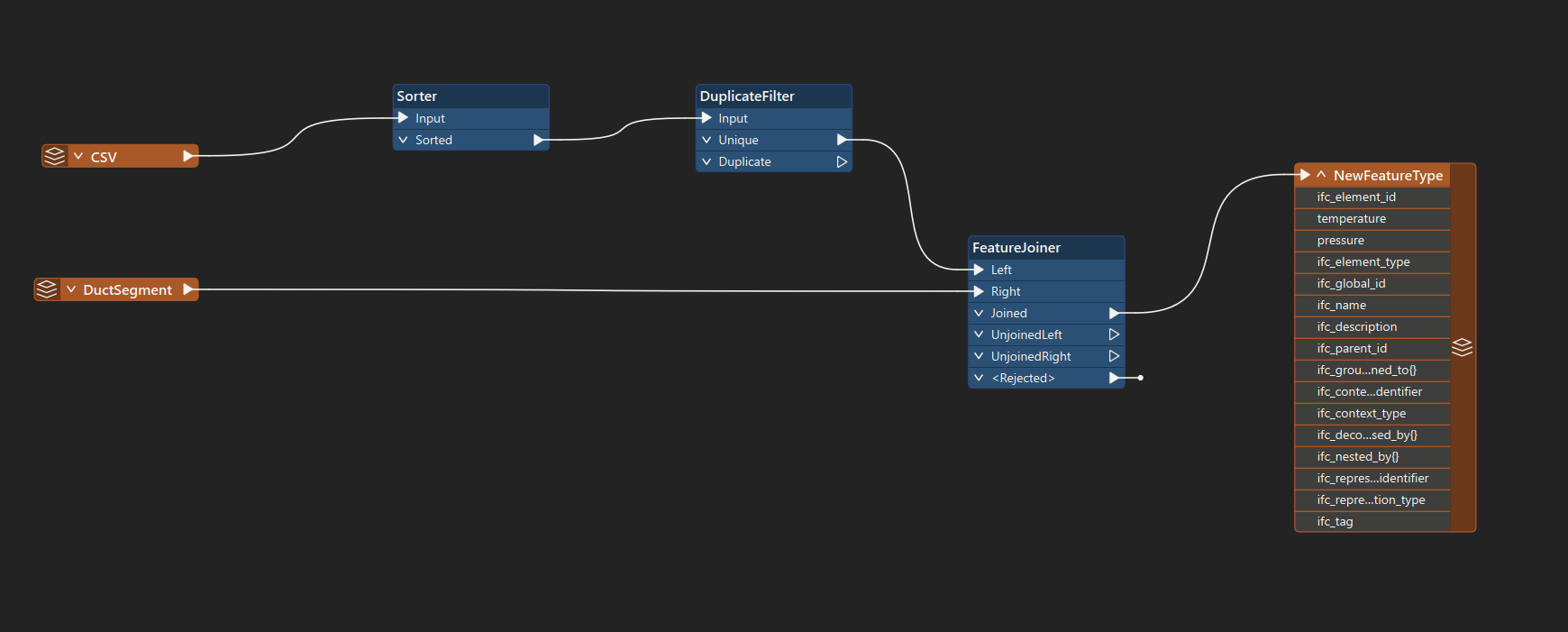
This example uses two input files: a CSV file that contains the temperature and pressure readings of a duct segment along with its unique identifier. And an IFC file that comes with spatial coordinates of the duct segments across the factory. The objective here is to find the maximum temperature experienced by each duct segment and create a GeoJSON file that contains the information on maximum temperature and the spatial information.
Here’s how to implement this using FME:
- Create a reader that reads the CSV file.
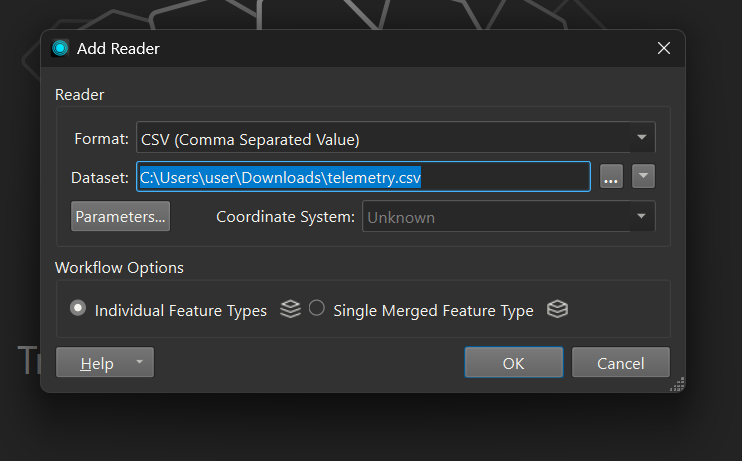
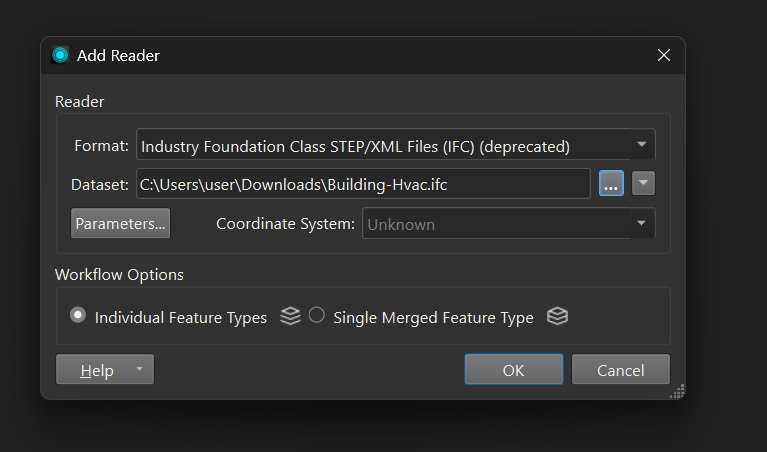
- Create another reader that reads the IFC files; FME natively supports this and can be configured as shown below.
- Configure a Sorter transformer to sort the temperature value of each duct segment in descending order.
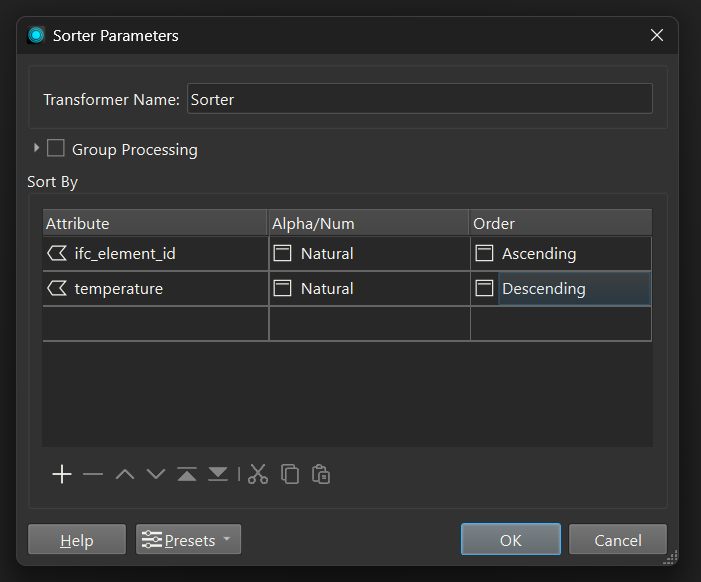
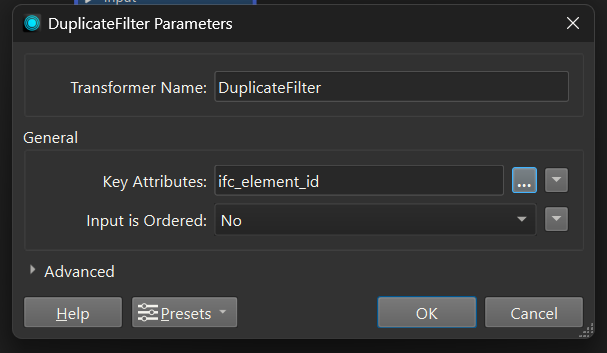
- Implement a duplicate filter to get only the maximum temperature out of it.
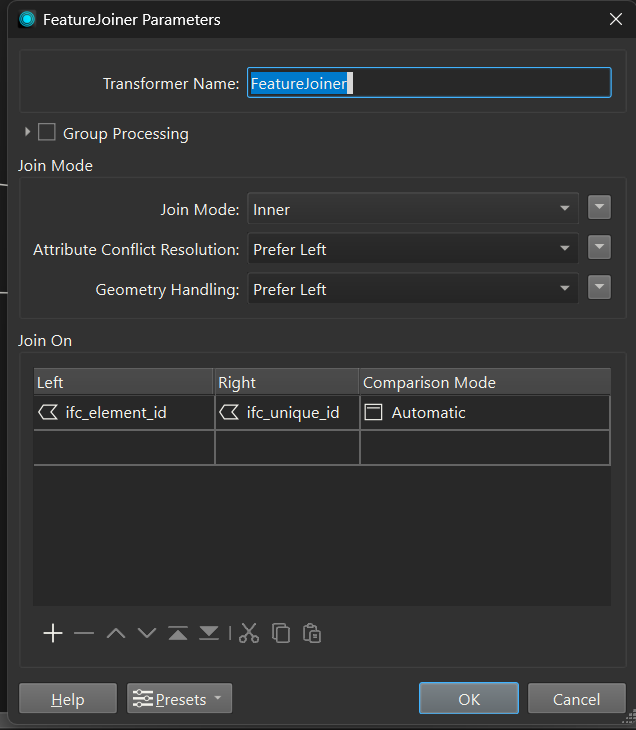
- Join the output with the IFC reader output based on the attribute ifc_element_id.
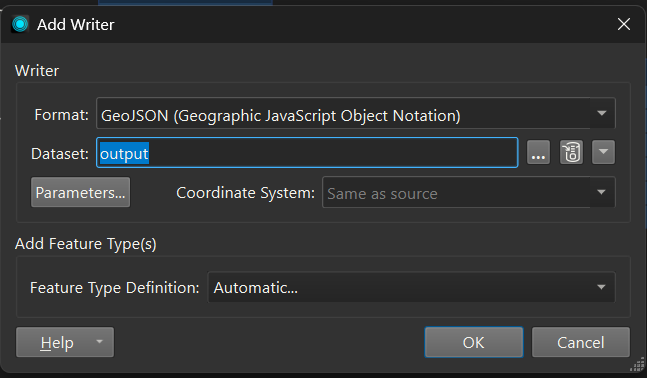
- Use the GeoJSON writer as below to write the combined output to your file of choice.
The completed workflow will look like this.
Implementing a digital twin requires integrating several such data sources and unifying information belonging to several formats. The crux of the developer’s job is to write such transformations using a programming language or an integration tool like FME.
Best practices for digital twins in manufacturing
Building a digital twin is a complex process that involves IOT data ingestion, data integration, transformation, analytics, and simulation. While most of the components need to be custom-built, several reference standards exist based on successful implementations. The section below covers some of the best practices you can use while building digital twins.
Establish early standardization based on open formats
A key challenge in building digital twins is to integrate data across different formats. You must have an analysis phase before the development phase and standardize the formats that are going to be used. This helps with building reusable validation modules and saves a lot of time in building custom integration modules in the development phase.
Treat coordinates as first-class concerns
The digital twin’s coordinate reference system must be decided before ingesting the data. This is very critical while dealing with spatial information. It is common to come across CAD models and GPS-tagged sensor information that do not line up during the integration process. Misaligned spatial data is one of the most time-consuming issues to debug.
Optimize sync frequencies
The frequency of synchronizing information can affect the cost and infrastructure requirements of the system, and it can also have a big impact on the development effort. Not every digital twin needs to update information in real time; some can afford to be a little slow and update in the range of a few seconds or even minutes. Defining a strategy and deciding sync frequency in the beginning itself can greatly simplify the digital twin development process.
Automate data integration based on an all-in-one spatial computing platform
Data integration is one of the core challenges of building digital twins. The framework used for integrating data for digital twins must natively support spatial data since visualization is a large aspect. Choosing a framework that natively supports complex transformations, spatial data, and AI is a great asset while building digital twins. FME is an example of a framework that can help with an end-to-end digital twin build.
Implement automated validations
Digital twins go through a large number of events throughout their lifetimes. You need to set up automatic validation logic to capture schema mismatches, out-of-order sensor values, or even missing fields. Such errors must be captured during the data ingestion phase itself and must be prevented from propagating further. Once they reach the visualization layer, they are harder to track and debug.
Last thoughts
A digital twin consists of several moving parts. It includes a modeling layer, predictive layer, and visualization layer that sit on top of a data foundation. Integrating data from several sources and building this data foundation is the most difficult part of building a digital twin. With Industry 4.0, digital twins are being used in several use cases across the manufacturing domain, like predictive maintenance, process optimization, quality control, spatial planning, and energy optimization. A low-code data integration tool like FME with support for spatial data is a good asset to have while building digital twins.
Continue reading this series
Spatial Computing
Learn the basics of spatial computing and its benefits, key applications, and practical examples for processing spatial data using low-code frameworks like FME and traditional GIS software.
KML To GeoJSON
Learn about converting KML to GeoJSON files, including methods, best practices, and key differences between the two spatial file formats.
Geospatial Data Integration: Best Practices
Learn about the importance of seamless integration of diverse geospatial data sources and the challenges, best practices, and workflows involved in achieving accurate mapping and analyses for decision-making.
Shapefile To GeoJSON: Best Practices
Learn three proven methods to convert shapefiles to GeoJSON for modern web mapping applications.
Digital Twin Examples
Learn how digital twin examples are reshaping manufacturing, cities, hospitals, and farms with real-time data.
Augmented Reality Databases
Learn the key database types, data requirements, and best practices for building production-ready augmented reality systems.
MCP Server Geospatial: Tutorial & Implementation
Learn how a geospatial MCP server connects AI agents to spatial tools reliably and at scale.
Spatial Data
Learn how spatial data models, formats, and no-code automation tools simplify complex integration workflows.
What is Geospatial Data
Learn geospatial data fundamentals, real-world use cases, pipeline implementation steps, and best practices using FME.
Digital Twins in Manufacturing
Learn what digital twins are, their manufacturing use cases, and how to tackle data integration challenges while digital twins effectively.
Digital Twins in Urban Planning
Learn how digital twins in urban planning enable real-time monitoring, scenario simulation, and smarter infrastructure decisions.
GeoPandas
Learn how GeoPandas loads, validates, and joins vector data in a complete point-in-polygon workflow.
Geographic Data
Learn what geographic data is, how it works, and best practices for managing spatial data workflows.
Visual Spatial Intelligence
Learn how production systems combine spatial data and geometry to answer real-world measurement questions reliably today.