

This work was done in collaboration with Safe Software partner Locus.
A presentation about my career? Why would anyone care about that?
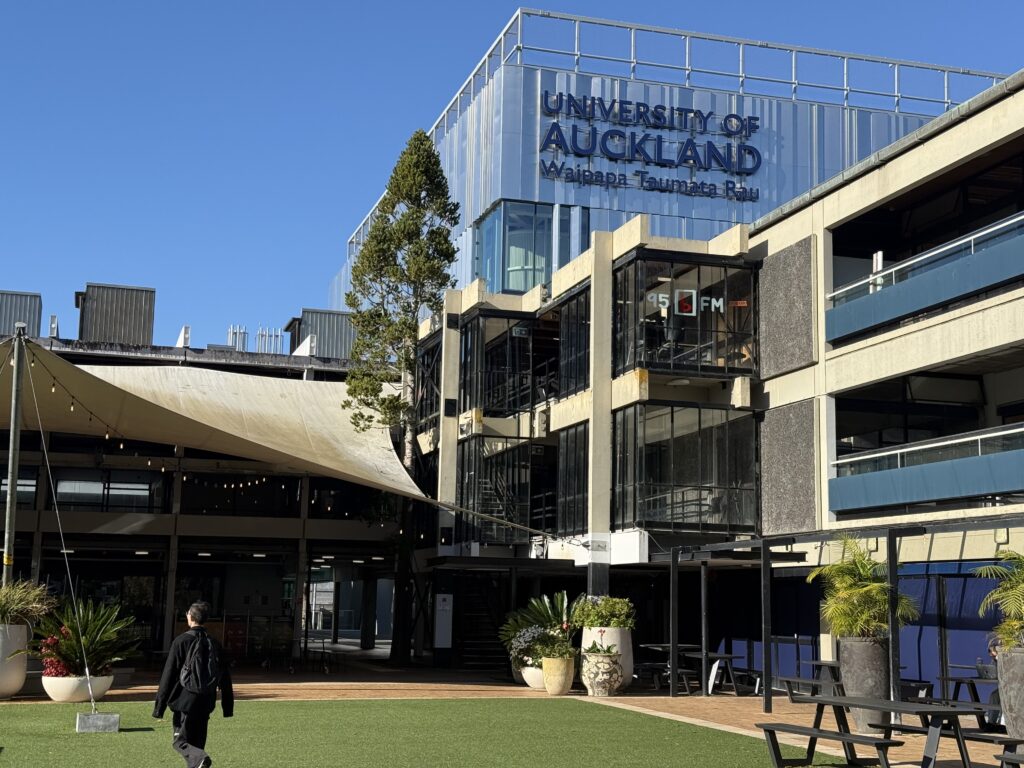
That was honestly my first reaction when the University of Auckland invited me to speak to their geospatial science students. Then I started thinking about the things I wish someone had told me when I was sitting in their seats… Before I knew that saying yes to an unglamorous task would take me to Taiwan, or that fiddling with FME at 5:00 AM while my dog wanted attention would become one of the most career-defining habits I ever developed.
So, I said yes, and I’ll tell you a bit more on why that matters in a moment.
Three Letters That Changed My Career
The title of my presentation was Three Letters. The three letters you ask? You, Yes, Dog, Fun, and FME, obviously.
I started using FME relatively early in my career, and I haven’t stopped. It’s the most powerful software I’ve ever worked with, not because it requires deep technical wizardry but almost despite that. It’s low-code, high-productivity, and it lets you build complex, repeatable data workflows without writing a line of code if you don’t want to. At Locus, we use it every day to solve real problems for our clients. It’s the backbone of what we do.
But the real reason FME changed my career wasn’t the software itself. It was what FME enabled: the projects, the confidence and the doors that opened, because I’d invested the time to understand it deeply.
The Training Manual Nobody Wanted to Update
Early in my career at Garmin, I volunteered to update a legacy training manual. Nobody else wanted to do it. It was messy, tedious, and out of date. I didn’t think much of the project, either, at the time, but I knew it needed to get done for our future cartographers.
Saying “Yes” to that one lengthy project led me to travel to Taiwan twice to train Garmin’s marine cartography team, as I came to understand the software, lessons, and our processes tip-to-tail. It was, without exaggeration, the most rewarding experience of my professional career. I learned how to read a room, adapt my approach (spoiler: ditch the textbook, grab a whiteboard), and communicate across cultures and languages. I also learned that the people who get the best opportunities aren’t always the smartest people in the room; they’re the most positive, dependable and open ones.
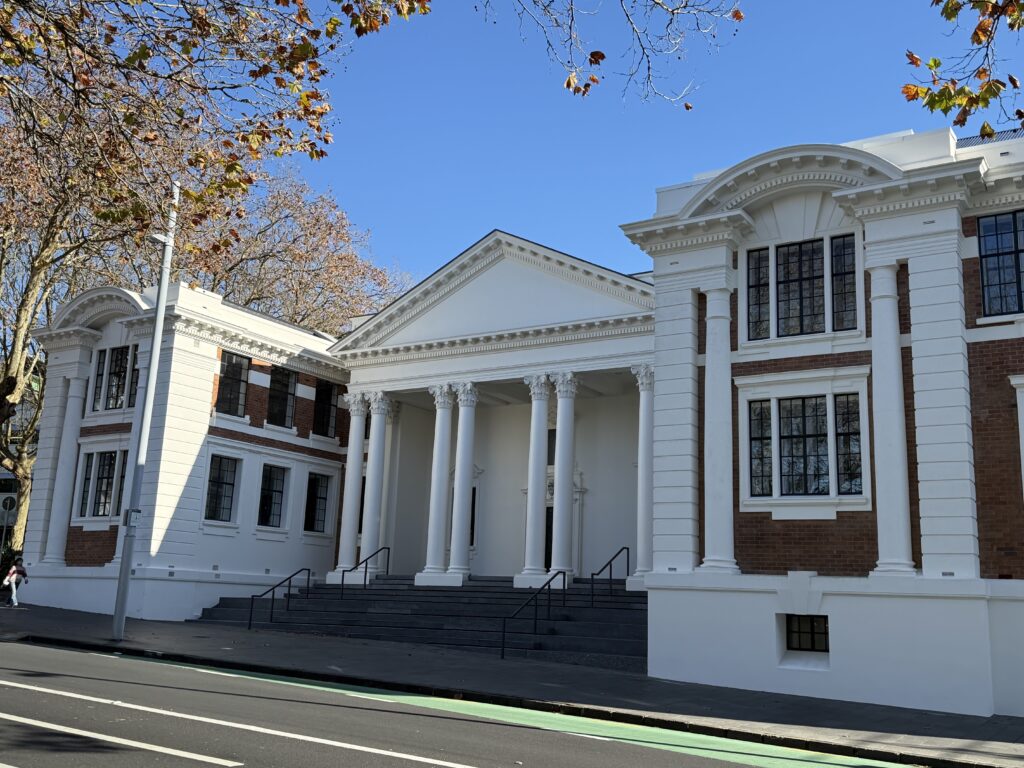
This is the message I delivered to the University of Auckland students. I shared with them that luck is what happens when preparation meets opportunity. I encouraged them to say yes to the things that don’t look exciting on the surface, because that’s often where rewarding experiences are hiding.
Why I Was Standing in That University Lecture Theatre
At Locus, we’re passionate about FME. That’s not a press release line, it’s genuinely what drives us, and the work we do every day is about helping organisations do more with their data; connect it, orchestrate it, scale it, or simply know they can trust it. But we’ve also always believed that our responsibility goes beyond the sale.
Getting into universities and showing students what’s possible with FME before they enter the workforce is part of that belief in action. The geospatial industry needs talented, curious people who know what these tools can do. The earlier they’re exposed to FME, the better, both for their careers and for the quality of work our sector produces.
The University of Auckland students were studying geospatial science, not FME specifically, but that’s exactly the point. Walking into that lecture theatre was a chance to show students what’s possible with these tools before they’ve even considered them for their careers. The earlier that connection gets made, the better.
What Happened in the Room
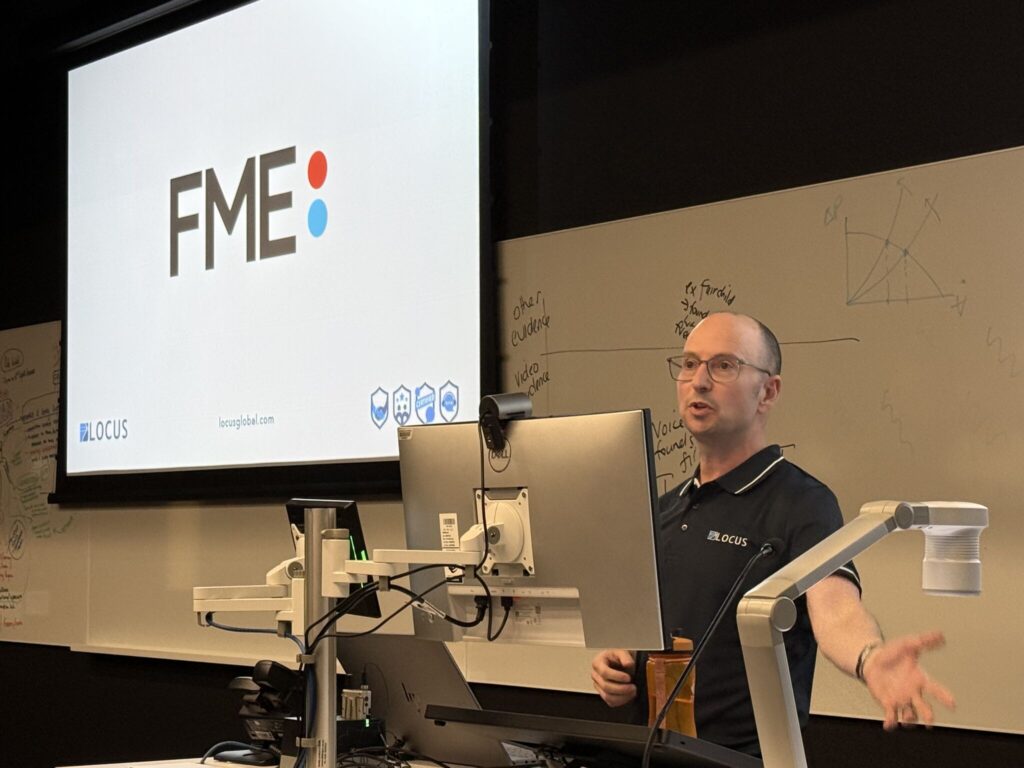
I’ll be honest, I wasn’t sure how it would land. Presenting your own career to a room full of 19 and 20-year-olds who have every reason to be thinking about their own futures can feel self-indulgent. But the students were amazing! Engaged and thoughtful with their questions.
Their feedback afterwards told me the message got through. Students wrote about reconsidering what career success means, about being inspired to say yes to the next opportunity that came along, and about seeing FME not just as a class exercise but as something that could shape a career. One student wrote that they were “a creature of habit” who tended not to step outside their comfort zone and that the talk had genuinely shifted their thinking. Another noted that hearing from a professional about how important FME could be felt different now that they’d actually had the opportunity to trial the software, following my talk.
“Monk-ing” and Why It Matters
One concept I highlighted with the students was what my colleague and I call “monk-ing”: investing time to experiment and truly master a tool, both in-office and outside work hours. I shared with the students about how I had used FME for hundreds of “work” projects, including processing drone data and building 3D augmented reality scenes (“work” being a loose term, as they were more fun than work). But I also frequently use FME at home for personal projects, including automating workflows for community initiatives and even (yes) building a workspace for my wife’s cross-stitch patterns.
Most importantly, the point wasn’t “work in your spare time.” The point was that the people who get really good at something, the ones who build expertise and lots of it, usually develop a relationship with their tools that goes beyond the day job.
This matters especially when you’re trying to stand out to a potential employer. Everyone applying for that first role has a degree. What separates candidates is often what they’ve done beyond the coursework. So my advice to the students? If you are looking to be in the geospatial industry (or any industry for that matter!) Take something you’re personally interested in, a hobby, a cause, a local community initiative or activity and apply FME to it, in any way you can. Solve a problem that actually matters to you. Then, when that potential employer asks what you’ve been working on in an interview, you’ve got a real answer built with a premium data integration platform.
What We’re Building
This university lecture was one step in a longer journey for Locus. We’re at the early stages of developing meaningful relationships with universities and educators in New Zealand and beyond, and we’re excited about it, properly excited.
The FME Grant Program through Safe Software is part of what makes this all possible, giving academic institutions access to the platform and opening the door to exactly these kinds of partnerships.
I started this post questioning whether anyone would care about my career story. I left that lecture theatre thinking maybe they did.
About the FME Grant Program
The FME Grant Program provides free FME licenses to eligible students, educational institutions, and humanitarian organizations. By removing financial barriers to data integration, the program helps people and organizations unlock the value of their data, solve real-world challenges, and make a meaningful impact in their communities and beyond.
To learn more and see if you qualify, visit the FME Grant Program page.