
Agentic AI vs Generative AI
Generative AI turns prompts into content drafts, summaries, and code. Agentic AI goes further: It plans, calls tools and APIs, uses memory, and iterates until the job is done. If you only need high-quality drafts, a generative approach is enough, but if you need a quality outcome, tickets updated, data queried, or builds triggered, you want an agentic AI with guardrails.
This article explains the differences between agentic AI and generative AI with the help of examples and delves deep into best practices while helping you choose the right AI paradigm.
Summary of core differences between generative AI and agentic AI
| Aspect | Generative AI | Agentic AI |
|---|---|---|
| Processing pattern | Linear: Input → model → output | Iterative: Plan → act → observe → learn |
| State | Stateless; each prompt is independent | Stateful; maintains context and progress |
| Focus | Product drafts, summary, or insights | Achieving outcomes and executing actions |
| Workflow | Single-turn or a few turns | Multi-step, feedback-driven |
| Output type | Text, code, and images | System updates, completed workflows |
Architecture patterns
Generative AI architecture
Generative AI systems transform textual or structured inputs into new artifacts, text, code, images, audio, video, or summaries. They don’t take external actions; instead, they provide content outputs that humans or systems can interpret or act upon. They follow a linear inference pipeline: a structured flow that takes user input, processes it through a model with safeguards, and outputs high-quality, context-aware content. Each stage in this pipeline plays a critical role in balancing creativity, accuracy, and safety.
An example of a linear generative AI stack includes a simple summarization system or a simple resume generator guided by a system prompt.
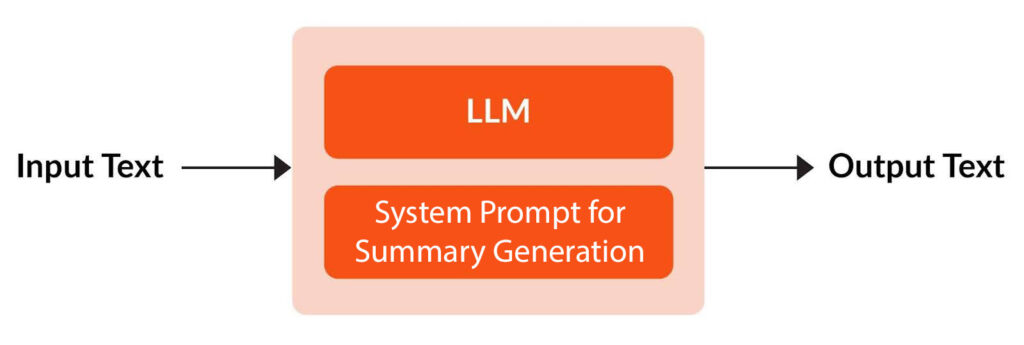
Here is an explanation of the elements in this diagram:
- LLM: A generative AI model trained on textual data in any language.
- System prompt: The prompt that guides the Summarizer on the specific task it is designed for
- Input text: The actual text the user wants to summarize
- Summarized text: The final output after the summarization
The most important part of a generative AI application is the model inference with safety guardrails. Once the input prompt is ready, it’s passed to the model inference engine, the core computational process where the AI predicts and generates content based on learned patterns. In content generation workflows, inference is optimized for latency (speed) and quality, often using techniques like caching or prompt compression to scale efficiently.
Before the model’s output is released, it passes through safety guardrails—filters that enforce safety, compliance, and brand guidelines. These include:
- Content filters to block harmful or off-brand material
- Bias detection layers to ensure fairness and neutrality
- Fact-checking modules or moderation APIs for truthfulness and compliance
After inference, the final stage converts raw AI outputs into structured, usable formats suitable for real-world applications. Depending on the use case, output formatting could include the creation of the following:
- Text like blog posts, summaries, or marketing copy
- JSON or structured data for integration with APIs or workflows (e.g., generating structured metadata or product descriptions)
- Multi-modal content, such as combining text with image prompts or tables
Finally, there is the process of downstream integration. These structured outputs can feed directly into downstream systems, such as CMS platforms, CRMs, or workflow automation tools. For example, an e-commerce AI tool could generate product copy (text) along with structured tags and SEO metadata (JSON) that are automatically published to the website.
Agentic AI architecture
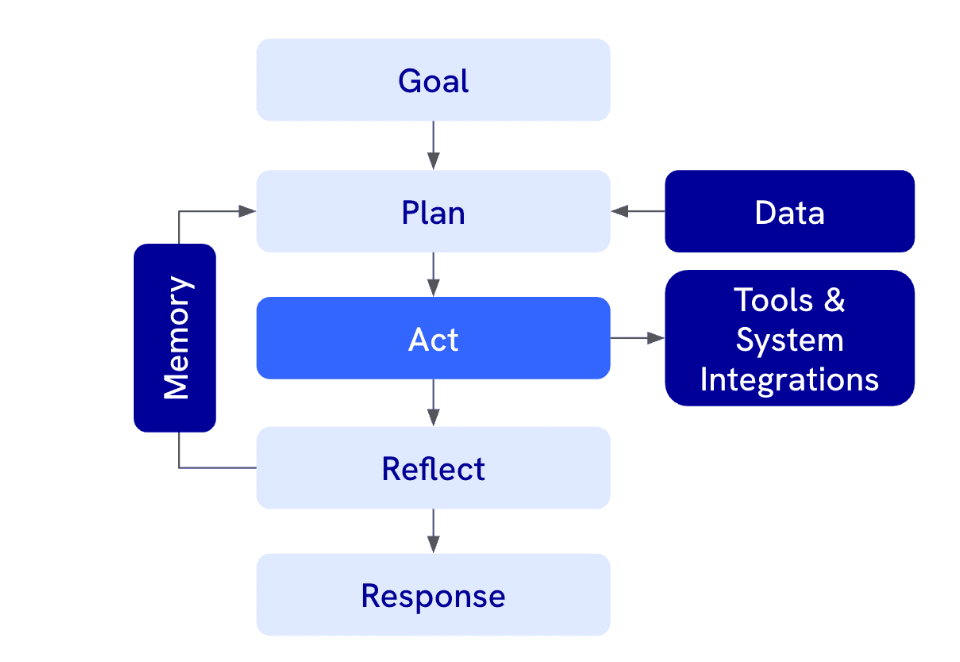
Agentic AI systems are structured around goal-driven execution, rather than single-pass generation. Architecturally, they are composed of coordinated components that support planning, tool use, memory, and control flow across multiple steps.
At a high level, an agentic AI stack typically includes the following layers:
- Goal and Task Definition Layer: This layer defines what the system is trying to achieve. Goals may be user-defined (e.g., “resolve a customer issue”) or system-generated (e.g., “optimize logistics routes”). Tasks are decomposed into smaller, executable steps that can be sequenced or revisited dynamically.
- Planning and Reasoning Layer: This layer determines how to achieve a goal. It may generate task plans, evaluate intermediate results, and decide whether to proceed, retry, branch, or escalate. This is where frameworks such as LangGraph or AutoGen introduce state machines, event-driven logic, or graph-based execution.
- Execution and Tooling Layer: Agents interact with external systems through tools and APIs, such as databases, enterprise applications, or LLMs. Each action is executed as a discrete step, allowing results to be validated or stored before continuing. This layer is responsible for side effects, such as updating records or triggering downstream processes.
- Memory and State Management Layer: Agentic systems maintain state across steps using short-term memory (current context) and long-term memory (past actions, decisions, or artifacts). This allows the system to preserve continuity, avoid redundant actions, and adapt behavior based on prior outcomes.
- Control, Observability, and Human-in-the-Loop Layer: This layer governs execution boundaries. It handles error recovery, rate limits, approval checkpoints, and observability (logs, traces, metrics). Human-in-the-loop controls are commonly implemented here, allowing workflows to pause for validation or override when confidence thresholds are not met.
Single-agent AI
Single-agent systems are designed to perform tasks by interacting with internal tools and not with other agents. It contains the logic of the task and uses a combination of GenAI models and tools to drive a desired output in a structured format from an unknown structure. With the help of the system prompt, the agents know the right tools to call.
For example, a simple sales agent that has access to an inventory API, a shipping API, and other relevant tools may look like this:
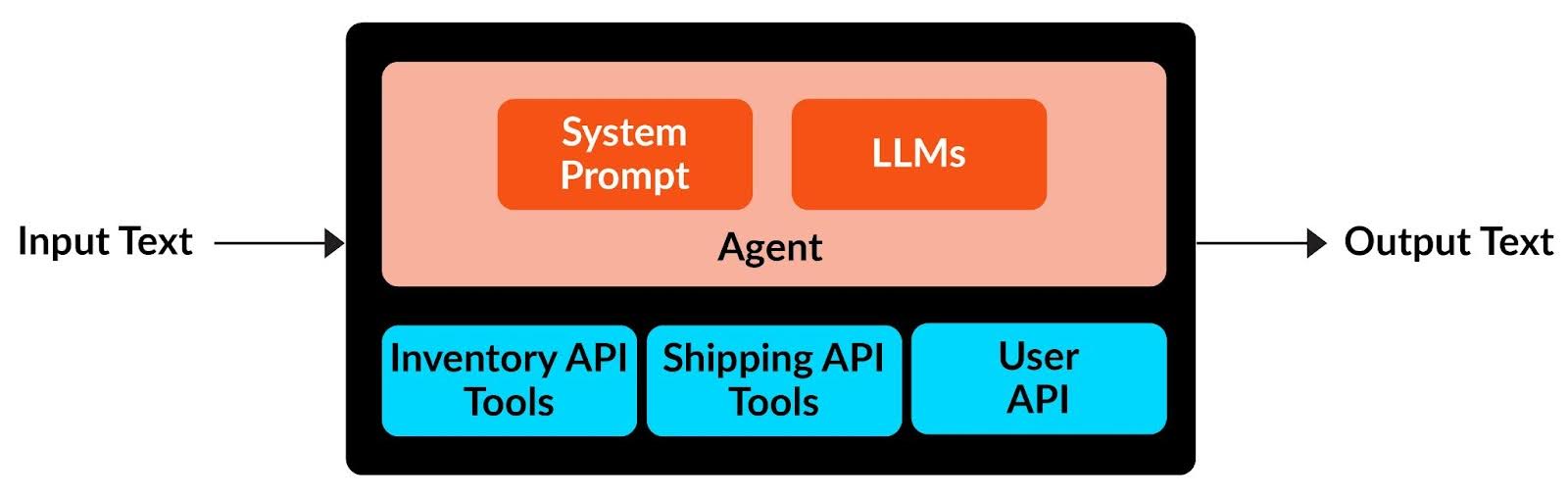
The sales agent above allows a user to find available products and purchase it through the agent.
Multi-agent collaboration
This arrangement consists of multiple interacting agents collaborating or competing within a shared environment. These agents can communicate, coordinate, and negotiate to achieve individual or collective goals. Multi-agent systems can be effective in complex scenarios where tasks can be distributed among agents, enhancing efficiency and scalability. For instance, in swarm robotics, multiple robots work together to accomplish tasks like search and rescue operations, leveraging their collective capabilities.
Multi-agent systems excel in environments requiring coordination among multiple entities. Applications include distributed problem-solving, traffic management systems where multiple agents (e.g., traffic lights, vehicles) coordinate to optimize flow, and collaborative filtering in recommendation systems.
Shown below is a banking agent who answers customer queries. The manager agent provides answers to all user queries and routes queries concerning account opening and money transfers to the account opening and money transfer agents, respectively, for results. These agents hand off the task to the human customer agent if additional support is needed.
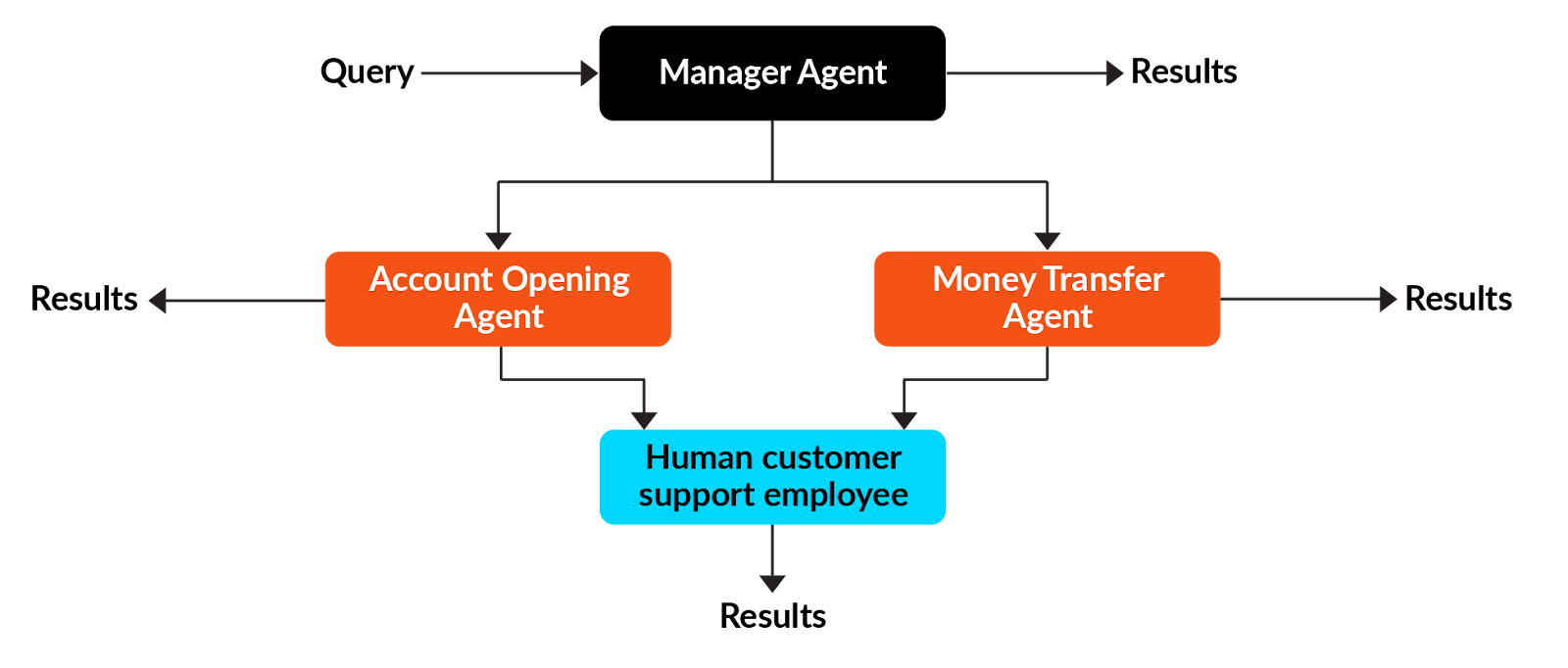
In some cases, multi-agent systems could be sequential:

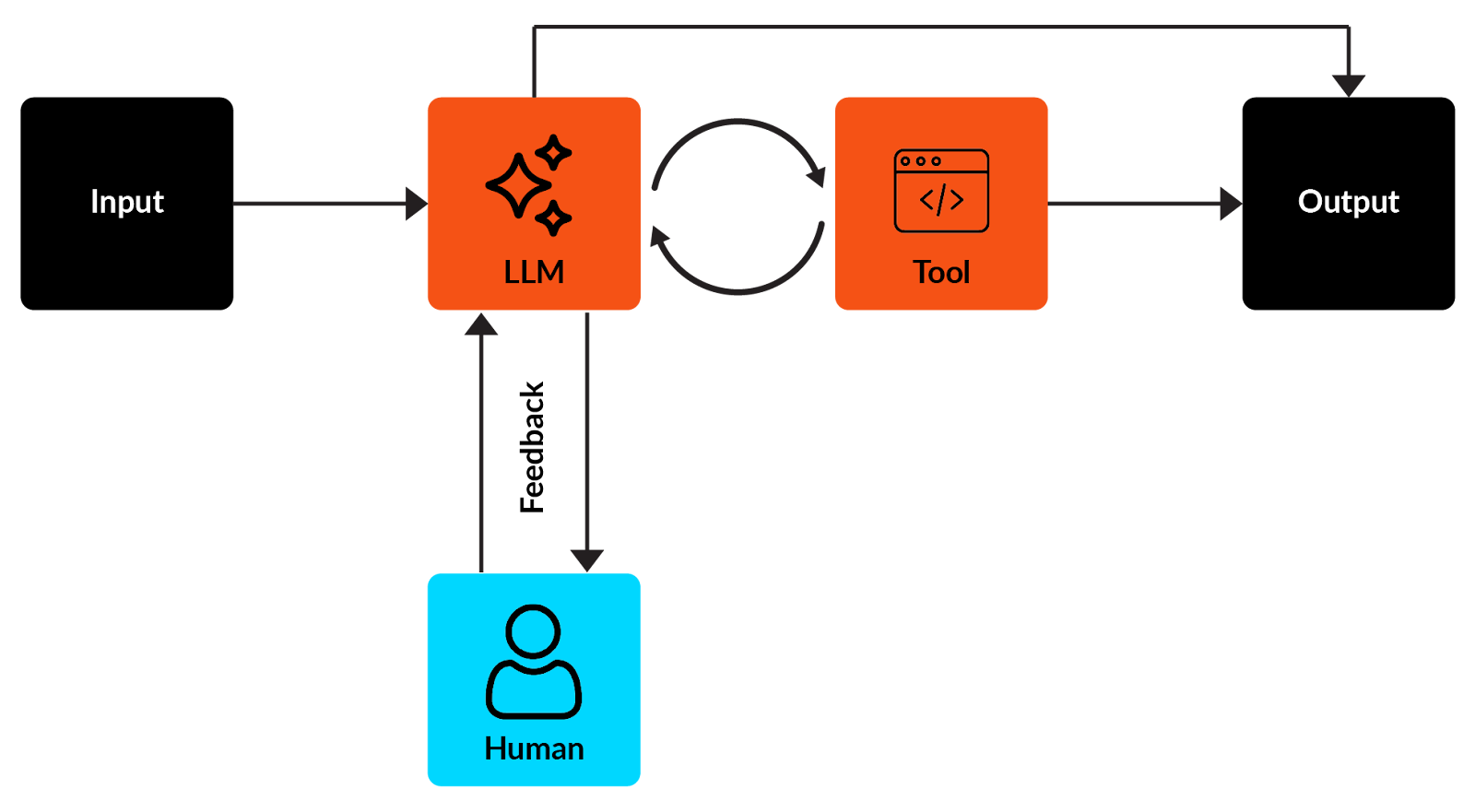
Human-in-the-loop
This involves inserting a human interaction step. After generating a rough draft, the agent stops and asks a person to approve or make changes to the draft. If the draft is approved, the agent publishes the content. If the draft is not approved, the agent revises the draft based on feedback and circles back. This scenario offers a greater degree of accuracy and trust, since humans can catch mistakes prior to finalizing.
Use cases
Generative AI use cases
Generative AI excels at content creation, design, and pattern recognition. It’s ideal for producing new, original outputs based on existing data. Here are some examples:
- Content creation for SEO: Businesses are leveraging generative AI to produce SEO-optimized content at scale, including blogs, articles, and landing pages that boost organic traffic. For example, a digital marketing agency can use GenAI tools to craft high-quality, keyword-rich blog posts that help clients rank higher in search results.
- Marketing and sales enablement: Sales teams often spend more time managing admin tasks than developing leads. Generative AI helps streamline their workflows with chatbots, virtual assistants, and automated outreach. By handling repetitive communication, AI tools let human salespeople focus on building relationships and closing deals.
- Product design and development: Generative AI can help organizations accelerate innovation by creating new product concepts based on market trends and consumer preferences. A fashion brand, for instance, could use AI to design an entire clothing line, generating concepts aligned with customer input and real-time market data.
- Customer support automation: Generative AI can power intelligent chatbots that craft accurate responses to customer inquiries in real time. For instance, an e-commerce business might use AI to handle order tracking, refund requests, or shipping questions, freeing human agents to handle complex cases.
Agentic AI use cases
Here are some good use cases for agentic AI:
- Customer service enhancement: Traditional chatbots have limitations due to the preprogrammed nature of the technology; they require human intervention at times. Agentic AI, on the other hand, can quickly understand what a customer’s intent and emotion is and take steps to resolve the issue. These agentic systems can predictively assess a situation and help ensure a smoother customer interaction with a business. Agentic AI can automate tedious tasks by gathering, cleaning, and formatting an organization’s data. These systems can take the weight off of human employees and free them up to do more high-impact projects and tasks.
- Healthcare applications: Agentic AI is used in the healthcare field, including in diagnostics, patient care, and streamlining administrative tasks. Smart devices like Propeller Health’s smart inhalers are powered by Agentic AI , which collects real-time data on medication use and air quality. The system autonomously alerts providers to potential issues, helping doctors deliver more proactive and personalized care.
- Automated workflow management: Agentic AI can manage end-to-end business processes from reordering supplies to optimizing supply chain operations. It can automate internal workflows to make it easier on human employees without the need for their physical intervention. For example, a logistics company might use it to dynamically adjust delivery routes and schedules based on traffic or shipment priorities. This results in faster operations and reduced costs.2
- Financial risk management: Financial institutions use agentic AI to optimize risk-adjusted financial outcomes in real time by analyzing market signals, portfolio performance, and credit data to inform decisions such as asset allocation, exposure limits, and credit approvals. Agentic AI can improve practices by acting autonomously and adjusting strategies based on real-time economic, social and political events. For example, a fintech firm might deploy Agentic AI to track global economic indicators and automatically adjust investment strategies for optimal returns.
Implementing an AI agent
Now that we have looked at the differences between AI agents and generative AI, let’s implement an AI agent. We will use FME by Safe Software, a low-code data integration platform, to quickly create an automated email response agent.
Consider a wholesaler that ships various products to its retail partners. The retail partners confirm shipping or send an email with their concerns. Let’s try to automate this with an agent that can call an enterprise data integration API in case of successful confirmations. The agent will send the email for human verification in case the email raises a concern or is unclear.
Here, we will assume that the email content is already present in a CSV for simplicity; in reality, you may need an integration with your email provider. The CSV file contains the sender email address, subject of the email, content, and the date on which the email was received. It will look like this:
"retailer1@gmail.com","received"," shipment received for ID 4733445", "12-12-2025"
"retailer1@gmail.com","delayed","This is not yet received in our warehouse","12-12-2025"
"retailer1@gmail.com", "regarding shipment 123321", "Can you give me the status of this shipment","12-12-2025"
"retailer1@gmail.com","received", "shipment received for ID 4733445", "12-12-2025"- Create an input reader in FME.

- Initialize a transformer using OpenAICaller to parse the email and respond with JSON.
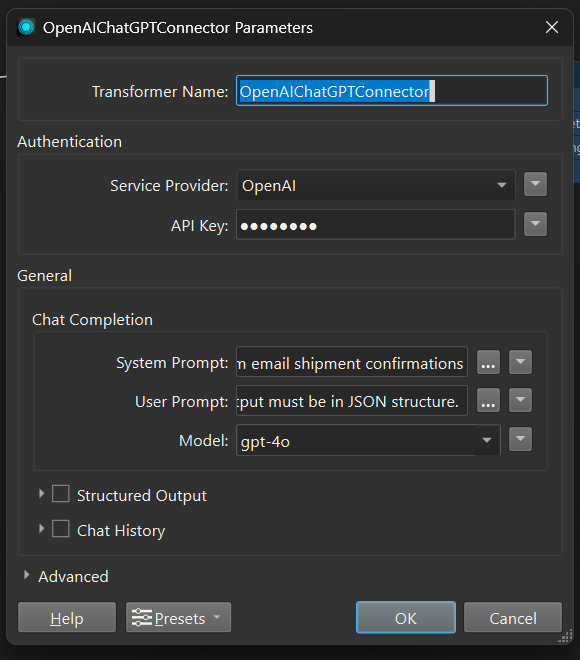
You can enter your OpenAI Key, system prompt, and user prompt here. The user prompt can be as simple as a statement to extract relevant parameters from the email. An example prompt is below.
Parse the email and extract the following details: Email sender, Order ID, Delivery Status, and Date. Order ID will be a 6-digit numerical identifier present in the email content. Shipment status can be complete or pending. Output must be in JSON structure. - Drag and drop the JSONExtractor transformer to extract the “status” attribute.
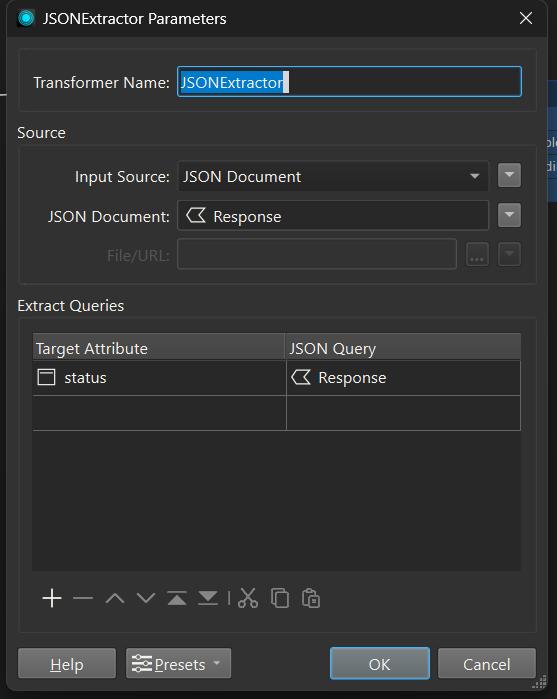
- Use the TestFilter transformer to evaluate the status attribute and make the decision to call the API or push the email for verification.
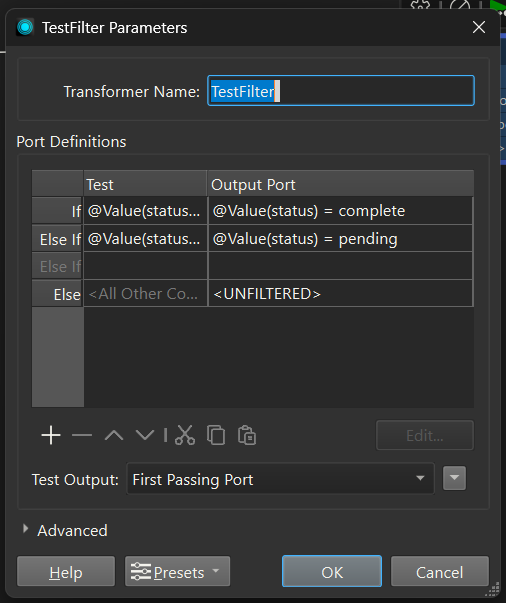
- Use the HTTPCaller transformer to call the organization’s enterprise data integration API if the status is complete. If the status is pending, write the emails to a separate file, which can then be reviewed by a human evaluator.
The completed agent will look as follows.
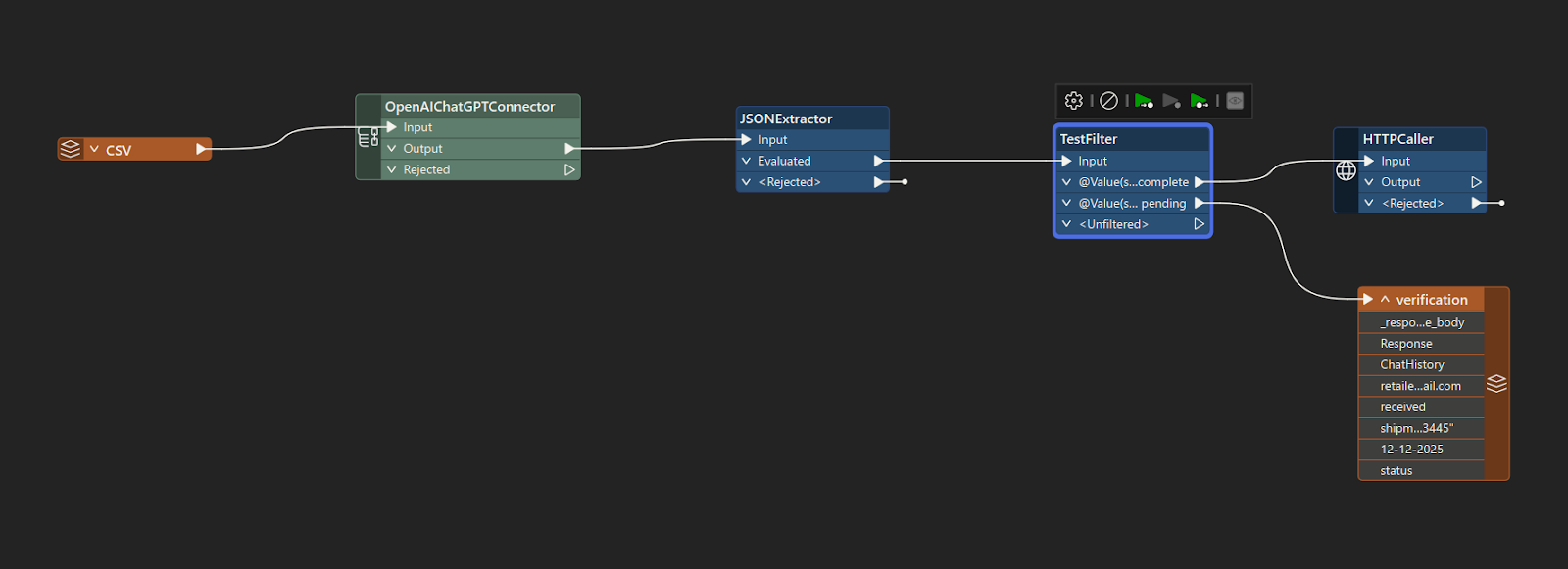
Note that this agent was simplified as part of a quick experiment, and in production, one would require proper integration with an email provider and an enterprise data integration API. FME provides the tools and frameworks for this if you have access to mailboxes and API credentials. This simple workflow shows how FME acts as the data backbone, enabling AI agents to make smarter, more reliable decisions.
Choosing the right AI for your business
The steps below should guide business leaders navigating this landscape in choosing the right AI approach for their businesses.
Check alignment with business goals
Your AI choice should directly support your organization’s strategic objectives. If your focus is on enhancing creativity, personalization, or user engagement, generative AI is the ideal fit because it can accelerate content creation, brainstorming, and user-facing personalization. If your priority is operational efficiency, process automation, or intelligent decision-making, agentic AI provides significantly more value. Agentic systems can monitor processes, make autonomous decisions, and trigger actions across platforms, making them well-suited for scaling operational workflows.
Analyze task complexity
The first step in selecting the right AI approach is understanding the complexity of the task at hand. Generative AI excels in workflows that require creativity, pattern recognition, or content production, such as writing, design ideation, or summarization. When the task involves multiple steps, decision points, or system interactions, agentic AI is better suited. Agentic systems can evaluate conditions, take autonomous actions, and orchestrate processes across tools, making them ideal for workflow management, operations, and multi-step decision-making.
Decides who owns control
If the tasks require a human to approve every output, then generative AI is the better approach. It provides predictability and explainability at every step of the process. If one can clearly define goals, allowed actions, and stop conditions, then agentic AI can be used. Using agentic AI involves trusting the system to operate within a sandbox. While using agentic AI, one should ensure that only the bare minimum permissions required are given for the agent.
Evaluate task variability
Agentic AI does well in the case of stable repetitive workflows, while generative AI is better in cases of highly variable and creative workflows. For example, if you want to create a monthly report of sales based on a defined set of tables and databases, agentic AI is preferred. On the other hand, an ad hoc strategy memo that includes the vision of the management team requires generative AI and a lot of human supervision.
Design for observability
When choosing agentic AI, one must ensure that there is clear state tracking and step-by-step logs. There must also be human overriding mechanisms. Rate limits and cost tracking are also important while implementing agentic AI systems. In the case of generative AI, the prompt version is important because of the high range of variability in output among slightly varied prompts. Output validation that includes schema verification and quality gates is required to ensure generative AI output is usable. Clear usage boundaries must be established for employees using generative AI to guard against policy violations.
Consider combining strengths for maximum impact
In many enterprise scenarios, the most effective solution is a hybrid approach that leverages both generative and agentic AI. For example, generative AI can produce content like customer emails, reports, or product descriptions, while agentic AI determines when to send them, whom to target, or how to integrate them into broader workflows. By combining creativity (generative AI) with autonomy (agentic AI), organizations can unlock more powerful, end-to-end intelligent systems that operate with both insight and precision.
Conclusion
Choosing between generative AI and agentic AI isn’t about deciding which technology is better; it’s about selecting the right tool for your specific goals, workflows, and business challenges. Each approach plays a distinct role in the evolving AI landscape, and understanding those differences is key to making informed, future-ready decisions.
Generative AI excels at producing creativity, insight, and personalized content at scale. Whether you’re generating marketing assets, drafting communications, designing user experiences, or summarizing complex information, generative AI amplifies human ingenuity and speeds up innovation.
Agentic AI, in contrast, brings structure, autonomy, and operational intelligence. It doesn’t just generate ideas; it takes action, follows multi-step workflows, calls tools, integrates with systems, and adapts to changing conditions. This makes it ideal for orchestrating processes, optimizing operations, and ensuring consistent execution across your business.
But there’s a critical foundation beneath all of this: high-quality, integrated, trusted data. Without it, generative and agentic AI can’t operate effectively or deliver reliable outcomes. This is why FME by Safe Software plays such a pivotal role. FME empowers organizations to transform, validate, and automate data across hundreds of formats and systems, ensuring that your AI initiatives are built on clean, connected, and enterprise-ready data. To fully unlock the potential of generative and agentic AI, start by strengthening your data foundation with FME. It’s the bridge between your enterprise data and the AI-powered future you’re building.
Continue reading this series
AI Agent Architecture: Tutorial & Examples
Learn the key components and architectural concepts behind AI agents, including LLMs, memory, functions, and routing, as well as best practices for implementation.
AI Agentic Workflows: Tutorial & Best Practices
Learn about the key design patterns for building AI agents and agentic workflows, and the best practices for building them using code-based frameworks and no-code platforms.
AI Agent Routing: Tutorial & Examples
Learn about the crucial role of AI agent routing in designing a scalable, extensible, and cost-effective AI system using various design patterns and best practices.
AI Agent Development: Tutorial & Best Practices
Learn about the development and significance of AI agents, using large language models to steer autonomous systems towards specific goals.
AI Agent Platform: Tutorial & Must-Have Features
Learn how AI agents, powered by LLMs, can perform tasks independently and how to choose the right platform for your needs.
AI Agent Use Cases
Learn the basics of implementing AI agents with agentic frameworks and how they revolutionize industries through autonomous decision-making and intelligent systems.
AI Agent Tools: Tutorial & Example
Learn about the capabilities and best practices for implementing tool-calling AI agents, including a Python-based LangGraph example and leveraging FME by Safe for no-code solutions.
AI Agent Examples
Learn about the core architecture and functionality of AI agents, including their key components and real-world examples, to understand how they can complete tasks autonomously.
No Code AI Agent Builder
Learn the benefits and limitations of no-code AI agent builders and how they democratize AI adoption for businesses, as well as the key components and features of these platforms.
Multi-Agent Systems: Implementation Best Practices
Learn about multi-agent systems and how they improve upon single-agent workflows in handling complex tasks with specialised roles, communication, coordination, and orchestration.
Langgraph Alternatives: The Top 6 Choices
Learn about LangGraph, a powerful yet complex orchestration framework for building intelligent systems, and its limitations, alternatives, and selection criteria.
Agentic AI vs Generative AI
Learn the differences between generative AI and agentic AI and how to choose the right AI paradigm for your needs.