
Key takeaways:
- Repower consolidated disparate data interfaces using FME, saving time and eliminating end-of-life risks from legacy tools.
- A central PostGIS hub brings data together into one source of truth for a digital twin.
- Automated validation workflows and optimized exports dramatically reduced processing times.
- Combining open-source tools with commercial platforms avoided vendor lock-in.
- Repower started with a single GIS-to-SAP interface and expanded incrementally, demonstrating that you don’t need to build a digital twin all at once.
Every utility company sits on a mountain of data, and the challenge is getting it all to work together. For Repower AG, an energy company in Switzerland, that challenge had become a real barrier to progress.
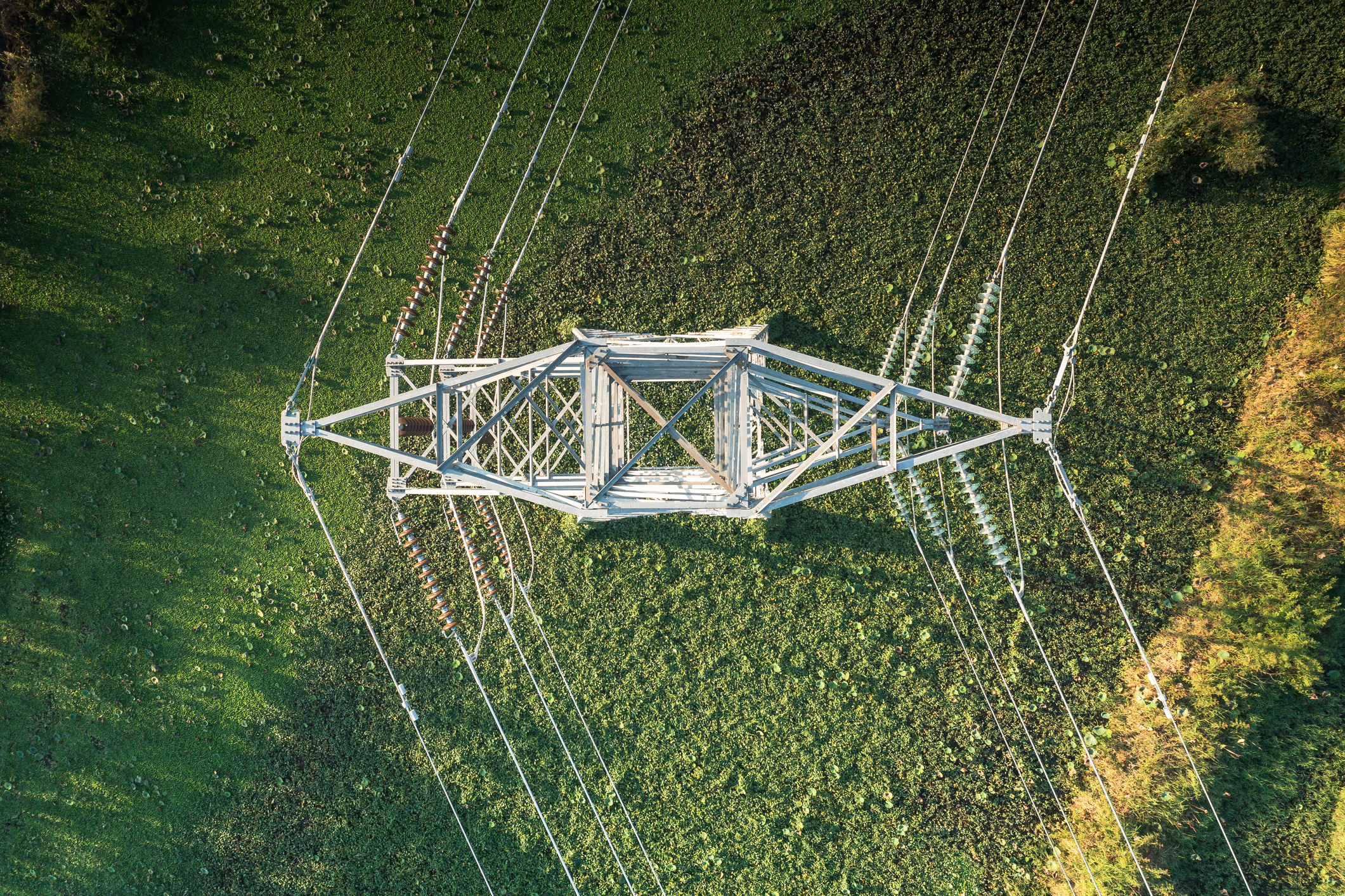
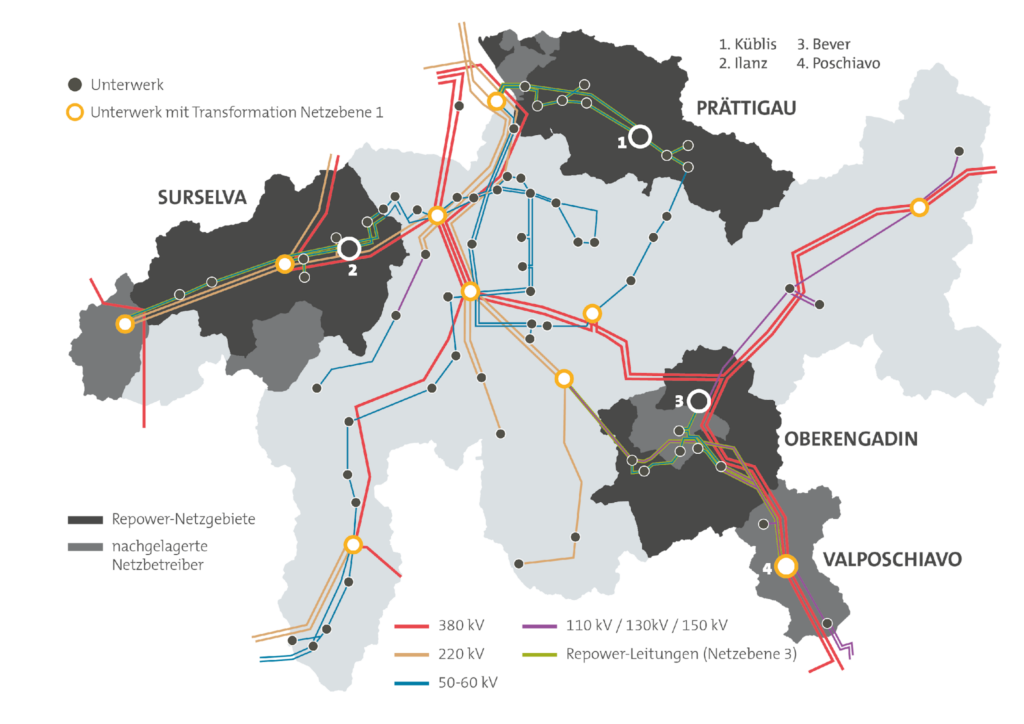
Repower operates a substantial electrical network winding through the Swiss mountains, and managing all that infrastructure means managing enormous volumes of data. For years, that data was scattered across systems that didn’t communicate well with each other.
This post recaps our webinar with Repower and conterra, in which they share how they built a central data hub that now serves as the foundation for a digital twin, and how that journey can offer a blueprint for other organizations facing similar challenges. Be sure to watch the webinar for a deep dive and live demos.
Too Many Interfaces, Too Little Harmony
Before adopting FME as a unified platform, Repower’s data landscape had grown unwieldy. Over time, the company had accumulated a sprawling number of interfaces connecting multiple systems, each built by different providers using different solutions. Some of those tools were reaching end-of-life, creating urgent maintenance headaches.
The consequences were familiar to anyone who’s dealt with data silos: operational overhead from maintaining so many disconnected integrations, inconsistent data quality across systems, and limited ability to get a unified view of network assets and operations.
Repower needed a way to harmonize everything onto a standardized platform, reducing maintenance effort, improving usability and user acceptance across the organization, and offering the flexibility to integrate both proprietary and open-source tools.
Implementing a Data Integration Solution
Repower’s use of FME started with building an interface between their GIS application and SAP, which was a purely relational data integration challenge. Once they saw what FME could do, the scope quickly expanded.
Several qualities made FME the right fit. Its ability to handle nearly any data source, whether on-premises, in the cloud, or streaming, meant Repower didn’t have to worry about being locked into specific technologies. The platform’s extensibility was equally important: through custom transformers, custom readers, and custom writers, Repower could handle Swiss-specific requirements like Interlis, a geodata description language used across Switzerland.
The combination of closed-source and open-source flexibility was a deciding factor. Repower could build on FME’s extensive out-of-the-box capabilities while extending it wherever their unique needs demanded.
Use Case 1: Data Validation and Network Topology
One of Repower’s most critical FME implementations involves exporting network topology data from their GIS application into Electricity, a grid planning and calculation platform. This particular workflow uses over 50 readers to process the data, and it serves several vital functions: tracking data integrity, validating network topology, running load flow calculations (voltage and power flow), performing short circuit calculations, and supporting grid reinforcement and protection planning.
Beyond day-to-day operations, this data validation pipeline is essential for long-term investment planning. Understanding the current state of the network with high accuracy allows Repower to forecast future demand and budget for infrastructure upgrades with confidence.
Use Case 2: Enterprise System Integration
FME also serves as the connective tissue between Repower’s enterprise systems. A straightforward example involves pulling data from a spatial database on one side and a REST API on the other, joining them together, and synchronizing information between applications. This kind of integration is transformative in eliminating manual data transfers and ensuring consistency across systems.
A more complex case involves exporting GIS data to a PostgreSQL database for regulatory reporting. Repower must provide cadastral data using the Interlis data model, and they also generate complex reports for the federal electricity commission. After switching their export pipeline to PostgreSQL through FME, processing time dropped from 60 minutes to just 13 minutes, which is a dramatic improvement that also freed up time for additional validation.
Use Case 3: Building the Digital Twin
All these data flows feed into Repower’s larger ambition: building a digital twin of their electrical network. At its core, a digital twin is about data processing and data analysis, giving colleagues a better, more comprehensive view for making decisions.
The architecture centers on a PostgreSQL database with PostGIS extensions, which serves as the central data hub. Data flows in from multiple sources: the GIS application (via Smallworld), smart meter data, control center feeds, electrical line information, and even open data providers.
On the consumption side, QGIS serves as a platform for visualization and analysis, while PandaPower (an open-source framework) handles network calculations. The result is a system where colleagues can independently analyze data, such as visualizing cable age information, inspecting low-voltage diagrams, or reviewing internal schematic data for facilities, through QGIS.
The ultimate goal is understanding consumer behavior and satisfaction: “The more data we have, the better we can provide information to our end customer.”
Data Virtualization and Local AI
The next major step is implementing data virtualization through FME Flow, which will allow them to build standardized APIs that give internal teams more flexible, real-time access to data without needing to move or copy it.
The company is also exploring local large language models for working with their data. Because of data sovereignty requirements, all processing needs to stay on-premises, which rules out cloud-based AI services. Repower is currently in the evaluation phase, investigating how on-premises LLMs can enhance their data analysis capabilities. Local LLM tools like Ollama and Mistral are already supported within FME, and these tools are becoming more powerful and impressive all the time.
Takeaways for Your Own Journey
Repower’s experience offers several lessons for organizations at any stage of their digitalization journey:
Start with one use case and expand. Repower began with a single GIS-to-SAP interface and gradually added more connections and use cases. You don’t need to solve everything at once; a successful first project builds momentum and institutional knowledge.
Invest in data quality early. Ensuring data quality is an ongoing process, which is why automated validation workflows are the foundation everything else depends on.
Choose a platform that doesn’t lock you in. Repower’s ability to mix commercial and open-source tools, including FME, PostgreSQL, PostGIS, QGIS, and PandaPower, gave them flexibility to choose the best tool for each job.
Think about data sovereignty from the start. Repower runs everything on-premises due to data sovereignty requirements. This constraint shaped their technology choices, including their approach to AI. Understanding your own regulatory and security requirements early will save significant rework later.
A digital twin is a journey, not a destination. The central data hub is the foundation, but Repower continues to add data sources, build new integrations, and explore emerging technologies. The architecture needs to support that kind of evolution.
Want to get started with FME? Safe Software offers a free 90-minute FME Accelerator program at fme.safe.com/accelerator, and you can join the FME Community at community.safe.com.